Search for “omega 3 benefits” and you will find a long list: memory, focus, immunity, joints, skin, mood, inflammation. Then look up what an Omega-3 product is legally allowed to print on its packaging, and the list shrinks to three lines.
The gap between those two lists does not mean that everything unauthorised is false. It means something else, more useful to know when you buy.
The three authorised claims
In the European Union, health claims on foods and supplements are regulated by Regulation (EC) 1924/2006, and the list of permitted ones is set by Regulation (EU) 432/2012. For EPA and DHA, exactly these are authorised:
- “DHA contributes to maintenance of normal brain function” — valid at a daily intake of 250 mg DHA.
- “DHA contributes to the maintenance of normal vision” — the same threshold.
- “EPA and DHA contribute to the normal function of the heart” — at a daily intake of 250 mg EPA plus DHA.
The wording is not decorative. The word repeated in all three is maintenance of normal. The claim says the nutrient has a role in the ordinary functioning of the body, not that it improves something, not that it repairs, and certainly not that it treats.
Why there are so few
A claim reaches the authorised list after the European Food Safety Authority assesses the dossier and issues a scientific opinion, and the European Commission then authorises it. It is a long, costly procedure, and it requires consistent evidence in humans, not in cells or mice.
Many of the effects written about in research have not passed this filter. Sometimes because the studies are too small or contradictory, sometimes because nobody submitted the dossier, which is expensive. Absence from the list is not a refutation, but it is not a confirmation either. It is an area where the required standard of evidence has not been met.
How the rule gets sidestepped, and how to spot it
The rule applies to packaging and commercial communication. Companies that want to suggest more without writing more have a few predictable methods:
- The product name makes the claim. A supplement called “Memory Boost” says something the label would not be allowed to say in a sentence.
- The image makes it. A brain drawn on the box, a couple of athletes, a child doing homework.
- Others make it on their behalf. Testimonials, influencers, sponsored articles describing effects the brand cannot write directly.
- A study is quoted, not the product. “Research shows that Omega-3 …”, followed by a list that the product in question cannot support.
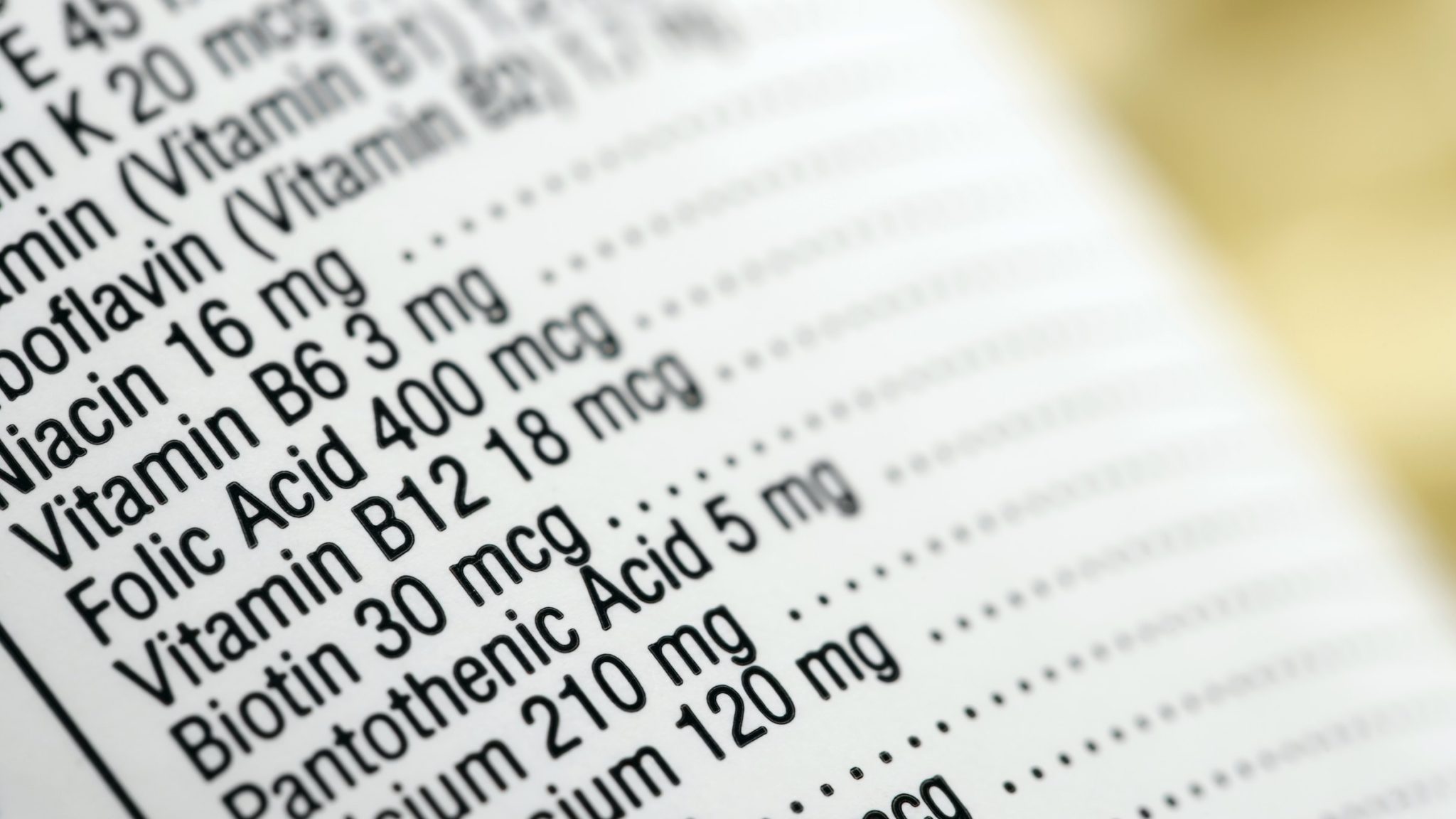
None of this automatically means the product is poor. It means that about the product you still know no more than you did. The real information stays in the nutrition table.
The 250 mg threshold changes the conversation
The part most often lost from the three claims is the condition of use. All are valid from 250 mg a day.
That means a product can be perfectly legal, clean and correctly made, and still deliver so little DHA at its recommended dose that not even the authorised claims apply to it. It happens often with very cheap products, where the large number on the front is the amount of oil, not of DHA.
So the useful question is not “does it have Omega-3?”, but “how much DHA and EPA does it give me per day, and does it pass 250 mg?”.
What to take away
Three authorised claims, a threshold of 250 mg a day, and a nutrition table that tells the truth better than the front of the pack. The rest is, at best, research in progress, and at worst, copywriting.
If you want the practical side, we wrote separately about how to read an Omega-3 label, with the seven things to check on the back of the bottle.
The information in this article is general and does not constitute medical advice. If you have a condition or an ongoing treatment, talk to your doctor or pharmacist.